
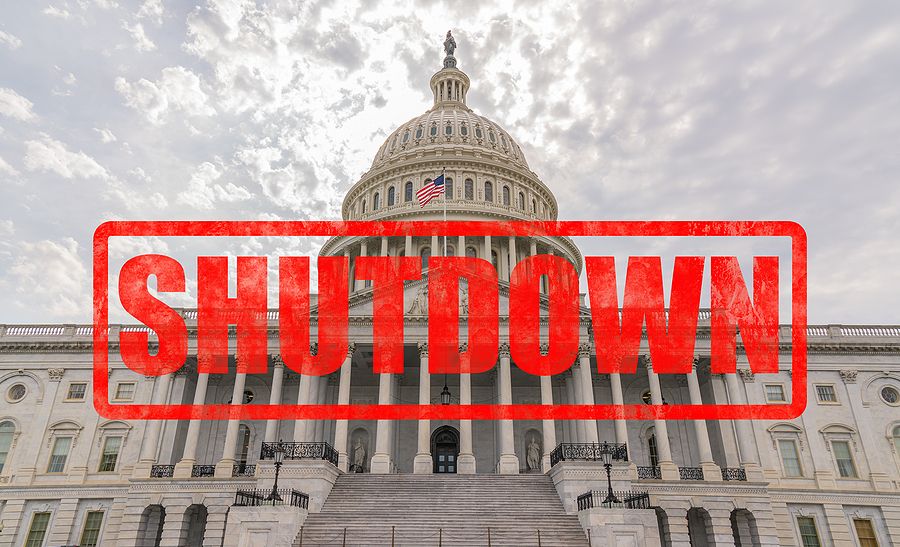
U.S. Government Shutdown Economic Impact

Understanding the Impacts of the U.S. Government Shutdown

The U.S. Government Shutdown is a complex scenario in which Congress and the President disagreed on a plan to fund government operations and agencies and failed to reach a budget agreement. Common areas of dispute included:

· Defense spending

· Healthcare

· Immigration

· Environmental regulations

· Education

Past shutdowns have occurred when negotiations failed regarding the national debt limit, resulting in a breach of the debt ceiling. Additionally, major policy issues have continued to play a critical role in budget disputes. For instance, delayed budget approval regarding the Affordable Care Act, immigration policy, and climate change initiatives became sticking points in negotiations.

Impact of a shutdown

When a government shutdown occurs, all non-essential federal government offices close, affecting many services and operations. Both the federal workforce and the public are directly and indirectly affected by a shutdown.

· Federal workforce: Employees categorized as 'non-essential' - those whose absence would not disrupt functions critical to the protection of life and property. During a shutdown, they are often furloughed or temporarily laid off.

· General public: The effects of a shutdown can also trickle down to everyday citizens, delaying the processing of passports, visas, social services, tax returns, as well as the closure of national parks and museums. Some government-funded research activities might also cease.

Repercussions on the economy

The economic impact of a government shutdown can be substantial, as it interrupts government spending, reduces overall economic growth, and creates uncertainty that can affect consumer and business confidence.

During a prolonged shutdown, millions of federal workers often go without pay, causing personal financial stress. In addition, a decrease in consumer spending may have a broader impact on the national economy and the performance of the stock market.

A shutdown also highlights the crucial importance of constructive dialogue between political parties and the President. It underscores the need for compromise in budget negotiations to prevent the disruptive consequences for U.S. citizens that could occur in the future should a similar event arise.

If you are concerned about the last shutdown or how a future one may impact your situation, consult a financial professional to discuss your specific circumstances.

Past performance is not indicative of future results. The material above has been provided for informational purposes only and is not intended as legal or investment advice or a recommendation of any particular security or strategy. The investment strategy and themes discussed herein may be unsuitable for investors depending on their specific investment objectives and financial situation. Information obtained from third-party sources is believed to be reliable though its accuracy is not guaranteed, and J. Martin Wealth Management makes no representation or warranty as to the accuracy or completeness of the information, which should not be used as the basis of any investment decision. Information contained on third party websites that J. Martin Wealth Management may link to are not reviewed in their entirety for accuracy and J. Martin Wealth Management assumes no liability for the information contained on these websites. Opinions expressed in this commentary reflect subjective judgments of the author based on conditions at the time of writing and are subject to change without notice. No part of this material may be reproduced in any form, or referred to in any other publication, without express written permission from J. Martin Wealth Management. For more information about J. Martin Wealth Management, including our Form ADV brochures, please visit https://adviserinfo.sec.gov."

Wealth Watch Advisors, Inc. is an SEC-registered investment advisory firm. Registration does not imply a specific level of skill or training. The information above is for educational purposes only and is not personalized advice. All investments involve risk, including possible loss of principal. Before engaging our services, please review our Form ADV Part 2A and Part 3 (CRS) at www.wealthwatchadvisors.com.

The information I've included here is for illustrative and informational purposes only and should not be considered legal, tax, or investment advice. Investment advisory services are offered through Wealth Watch Advisors, Inc., an SEC-registered investment adviser. The firm transacts business only in states where it is properly registered or is excluded or exempted from registration requirements. SEC registration is not an endorsement of the firm by the Commission and does not imply that the adviser has attained a specific level of skill or ability. All investment strategies carry the potential for profit or loss. Investing involves risk, and no strategy can guarantee success or eliminate the possibility of loss. Neither Wealth Watch Advisors nor J. Martin Wealth Management, LLC, is endorsed by the Social Security Administration or any other governmental organization.